
Follow Us:
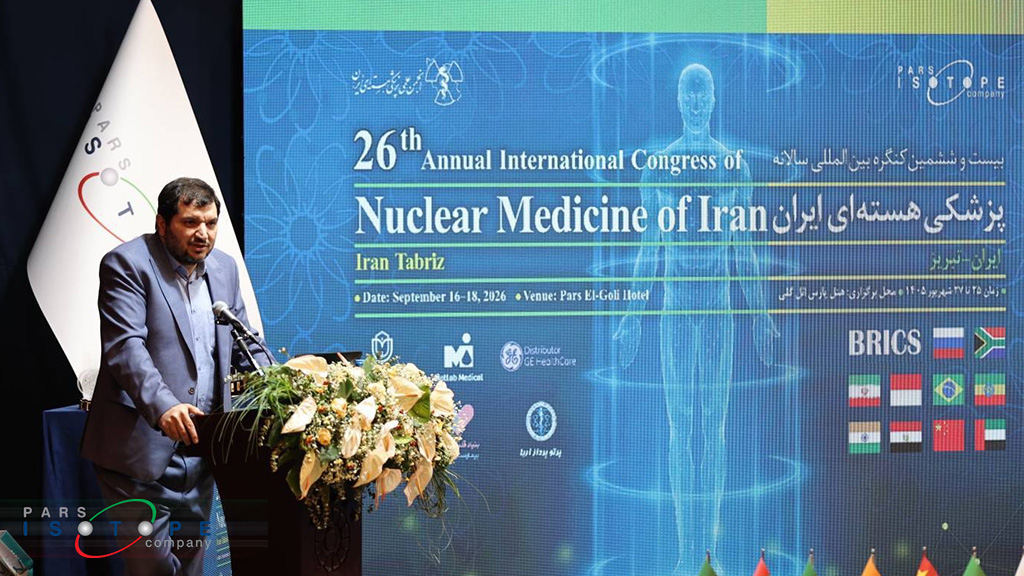
Pars Isotope CEO at the Closing Ceremony of the 26th Nuclear Medicine Congress: Moving Beyond “One Treatment for All” Toward “The Right Drug for the Right Patient”
Pars Isotope CEO, outlining the future vision of nuclear medicine, emphasized the development of novel radiopharmaceuticals, the use of advanced technologies, infrastructure development, and moving toward personalized treatments.
Mohammadreza Davarpanah, CEO of Pars Isotope Company, at the closing ceremony of the 26th Annual International Congress of Nuclear Medicine of Iran, referring to the developments and advancements in this field, described the country’s nuclear medicine as being at an important juncture in its development path and emphasized the necessity of continuing the scientific and technological movement in this arena.
While expressing gratitude to the organizers and all specialists and those involved in the congress, he stated regarding the special circumstances of holding this event: “This congress was held well despite the special conditions; however, perhaps few are aware of the volume of efforts and difficulties that existed behind the scenes of this event.”
Davarpanah, referring to the level of access of the country’s patients to modern diagnostic and treatment methods, said: “Without exaggeration, today we are in a golden era of nuclear medicine, and patients in our country can access the latest imaging methods and treatments of the day worldwide; while in many neighboring countries, such a level of access to treatment does not exist.”
The CEO of Pars Isotope further considered the development of novel radiopharmaceuticals as one of the important paths for the future of nuclear medicine and said: “We are moving toward a strategic future in the applications of radiopharmaceuticals, and we are pleased that experts and specialists from different parts of the country are also participating in clinical studies in this field.”
Referring to the Lead-212 radiopharmaceutical, he added: “For example, the Lead-212 radiopharmaceutical, which is easily discussed today, is still not available in many developed countries; but this radiopharmaceutical is produced in our country and will soon be made available to colleagues, specialists, and the dear people of Iran.”
Davarpanah considered this trend as indicative of the country’s nuclear medicine position at the frontiers of knowledge and technology and stated: “This trend shows that the country’s nuclear medicine is moving at the edges of knowledge and technology. We are not merely followers in this field, but we possess the capacity to be pioneers and can play a pioneering role in new areas of nuclear medicine.”
He also, referring to the role of modern technologies in the future of nuclear medicine, announced the implementation of major projects in the field of artificial intelligence and said: “In order not to fall behind the trend of global advancements, we have major projects in the field of artificial intelligence underway, and God willing, at next year’s conference, we will have the opportunity to present part of the achievements in this field and share our latest results and advancements with the medical community.”
The CEO of Pars Isotope, emphasizing the necessity of paying attention to the country’s conditions and requirements in the path of nuclear medicine development, listed infrastructure development and strengthening interdisciplinary cooperation as fundamental requirements for the future of this field and stated: “For the future of this field, we must consider several fundamental measures, the first of which is infrastructure development.”
He also emphasized the importance of teamwork in the development of nuclear medicine and added: “The development of nuclear medicine is not possible without teamwork and the companionship of specialists from different fields.”
Davarpanah further, referring to the outlook for radiopharmaceuticals, said: “The future of radiopharmaceuticals is very bright, and in the coming years, the path of nuclear medicine will not be limited to increasing patients’ lifespan, but will move toward significantly improving their quality of life.”
He added that the scope of application of radiopharmaceuticals in the coming years could go beyond oncology and encompass more parts of the disease diagnosis and treatment process.
The CEO of Pars Isotope, in the final part of his speech, described moving toward personalized medicine as one of the important horizons for the future of this field and said: “Our fundamental motto, which we hope will be realized and remembered, is to move beyond ‘one treatment for all’ and reach the era of ‘the right drug, for the right patient, at the right time, and with the right dose.’”
In the end, he considered the realization of nuclear medicine achievements as the result of the joint efforts of specialists, researchers, manufacturers, and the medical community and stated: “This honor belongs to all members of this great community who strive together for the progress of this field. We, as the custodians of production, and the medical community who work hard in this path, are partners in realizing these achievements, and this honor belongs to all dear ones who strive for the development of the country’s nuclear medicine.”
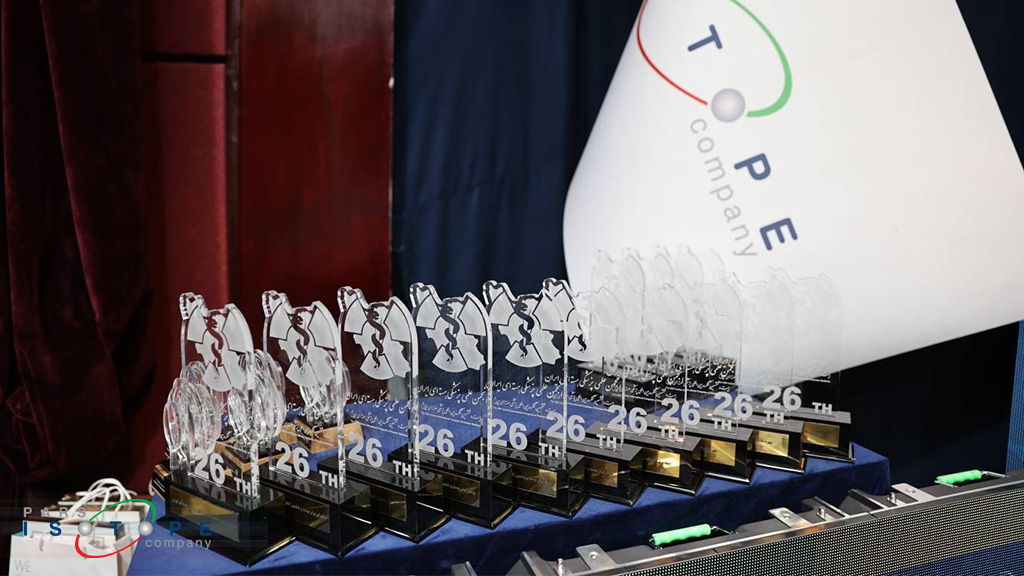
The 26th Annual International Congress of Nuclear Medicine of Iran, after three days of holding and with the presence of domestic and foreign specialists and experts, concluded its work on Friday, September 18; an event in which the latest achievements, experiences, and outlooks of nuclear medicine and the applications of radiopharmaceuticals were discussed and exchanged.