
Follow Us:
A New Step in the Development of Radiopharmaceuticals for Neuroendocrine Tumors; Promising Results of Ga-68-DOTA-LM3 in a Case Study
Results from a case study indicate that Ga‑68‑DOTA‑LM3, by identifying a greater number of lesions in patients with neuroendocrine tumors, can provide new opportunities for patient selection and for the advancement of targeted radionuclide therapies.
Recent advances in the field of nuclear medicine and theranostics have opened new horizons in the diagnosis and treatment of neuroendocrine neoplasms (NENs). In this context, the results of a case study have demonstrated the potential of Ga‑68‑DOTA‑LM3 in the evaluation of patients with neuroendocrine tumors.
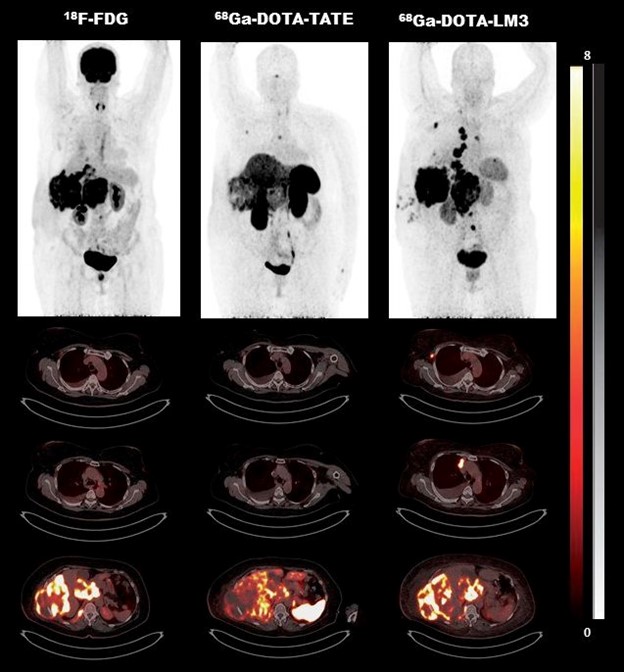
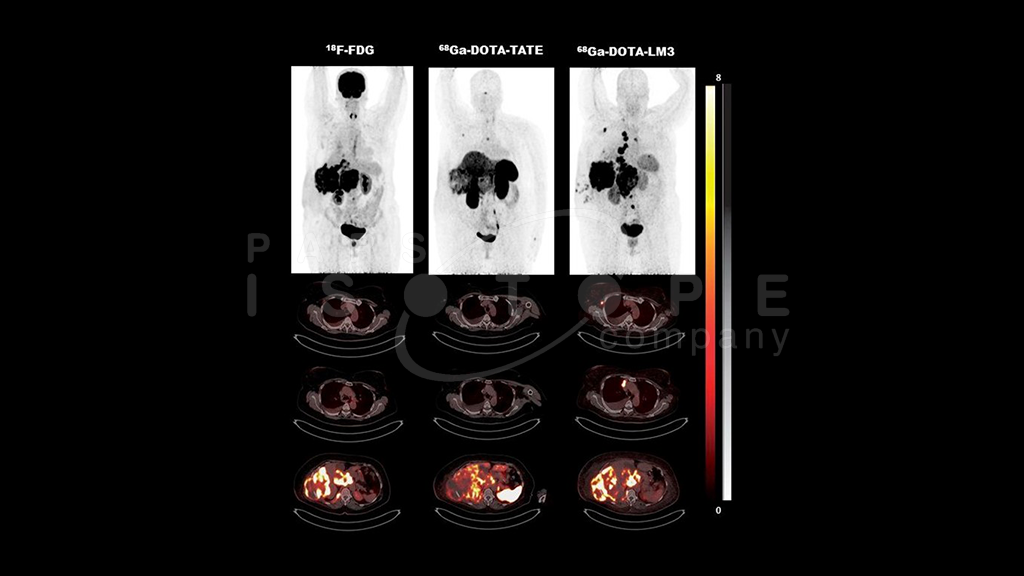
In this study, the patient was a 60‑year‑old woman diagnosed with pancreatic neuroendocrine tumor, with a Ki‑67 proliferation index of 60%. F‑18‑FDG PET/CT imaging revealed the primary pancreatic tumor along with hepatic and lymph node metastases, all demonstrating high radiopharmaceutical uptake, indicative of aggressive tumor behavior.
Subsequently, Ga‑68‑DOTATATE PET/CT imaging revealed only mild‑to‑moderate uptake in these lesions—a finding that could have precluded the patient from receiving conventional PRRT based on somatostatin receptor agonists.
However, imaging with Ga‑68‑DOTA‑LM3 PET/CT yielded promising results. This radiopharmaceutical not only demonstrated intense uptake in all known lesions, but also identified additional lesions that had not been visualized on Ga‑68‑DOTATATE imaging, nor even on F‑18‑FDG PET/CT. This finding highlights the high potential of radiopharmaceuticals based on somatostatin receptor antagonists in enhancing diagnostic sensitivity, enabling more accurate assessment of disease extent, and expanding therapeutic options for patients with neuroendocrine tumors.
Based on the findings of this study, the use of Ga‑68‑DOTA‑LM3 may enable the selection of a broader patient population for targeted radionuclide therapies and play an effective role in the advancement of personalized treatment approaches for patients with neuroendocrine tumors.
It is noteworthy that F‑18‑FDG and Ga‑68‑DOTATATE, which served as the reference methods for comparison in this study, are currently part of the Pars Isotope product portfolio and are manufactured domestically. Furthermore, Ga‑68‑DOTA‑LM3 is currently undergoing clinical trial phases within the company’s research and development program. The development of this agent aligns with Pars Isotope’s strategic vision to expand its portfolio of specialized products for neuroendocrine tumors, advance diagnostic and therapeutic technologies, and address the growing needs of nuclear medicine centers.