
Follow Us:
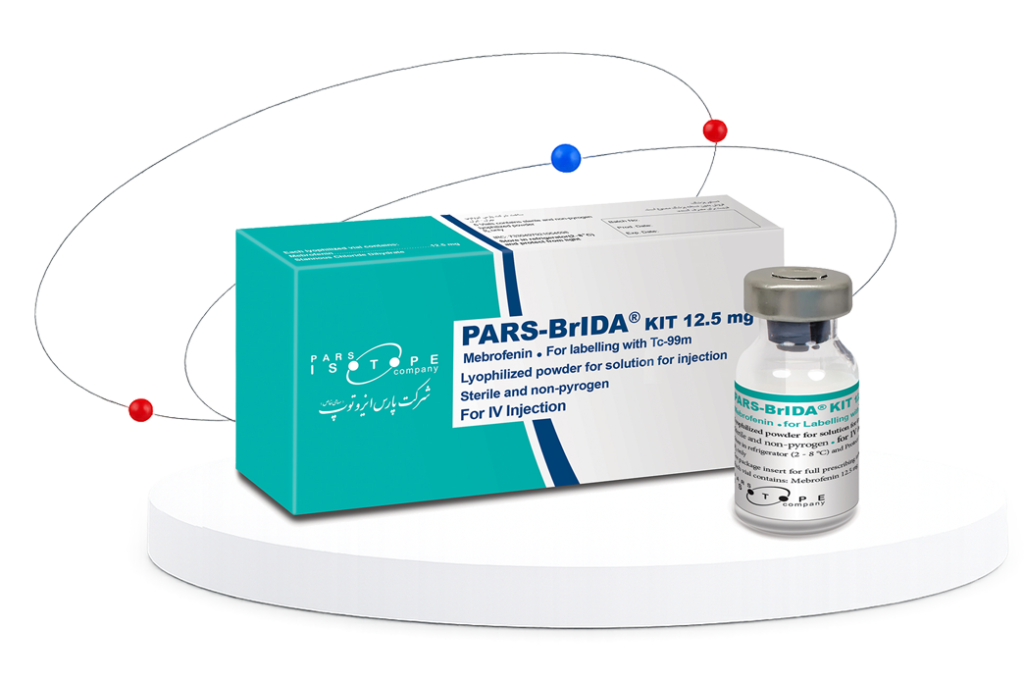
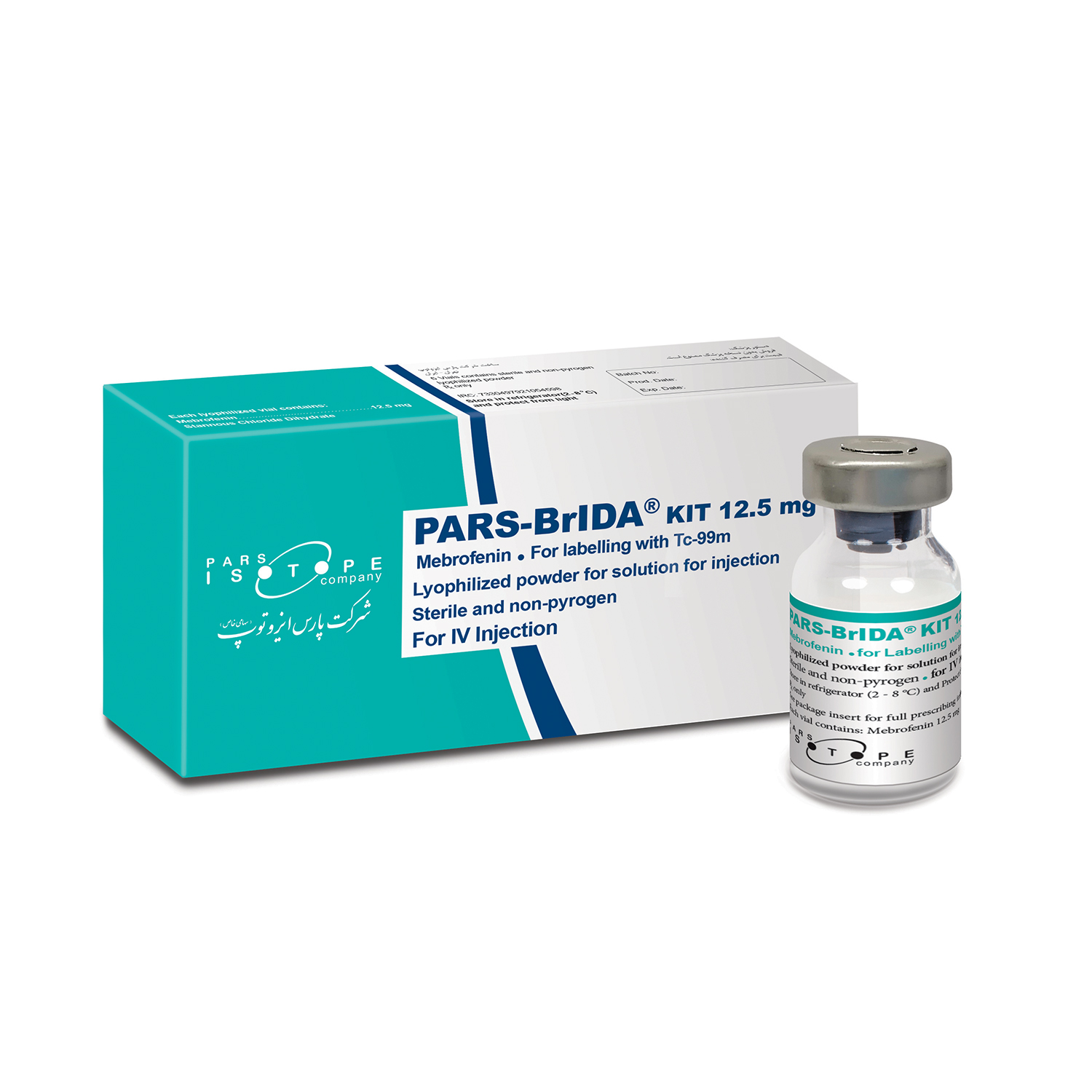
PARS‑BrIDA® Kit
Sterile, NonPyrogen Lyophilized Powder
PARS‑BrIDA® is a sterile, non‑pyrogen lyophilized powder diagnostic kit for the preparation of 99mTc‑Mebrofenin. After radiolabeling with technetium‑99m, it is used for SPECT imaging of the hepatobiliary system. Each vial contains 12.5 mg of mebrofenin and, after reconstitution, is administered intravenously. This product is intended solely for diagnostic use and provides precise functional information on bile uptake and excretion.
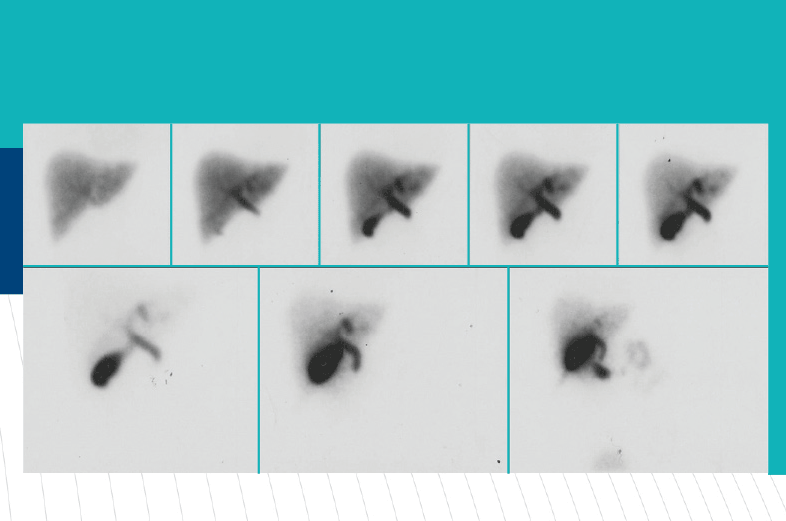
- Diagnosis of acute cholecystitis (acute inflammation of the gallbladder)
- Evaluation of chronic biliary tract disorders and diseases
- Assessment of biliary obstruction (complete or partial)
- Diagnosis of congenital biliary anomalies, such as biliary atresia
- Detection of bile leakage following surgery or trauma
- Identification of intrahepatic lesions, including differentiation between focal nodular hyperplasia (FNH) and hepatocellular carcinoma (HCC)
99mTc‑Mebrofenin is a derivative of iminodiacetic acid (IDA) compounds and functions as a hepatobiliary tracer. Following intravenous administration, it is rapidly taken up by hepatocytes and excreted into the biliary tract and gallbladder via the biliary system. Owing to this physiological pathway, 99mTc‑Mebrofenin enables imaging of liver function, bile ducts, and the gallbladder.
The PARS‑BrIDA® kit is manufactured under aseptic conditions. After radiolabeling with a specified amount of sterile, non‑pyrogen sodium pertechnetate injection (Na⁹⁹ᵐTcO₄) — eluted from a ⁹⁹Mo/⁹⁹ᵐTc generator — the preparation is ready for intravenous administration. The dose to be used will be prescribed by the physician.
Mebrofenin (12.5 mg)
Stannous Chloride Dihydrate
- The PARS‑BrIDA® kit should not be used after the expiration date printed on the box.
- Store the PARS‑BrIDA® kit in a refrigerator (2°C to 8°C) and protected from light. The cold chain must be maintained under all circumstances.
- After radiolabeling, 99mTc‑Mebrofenin must be used within 6 hours and stored at 15°C to 25°C.
You must be logged in to post a comment.